
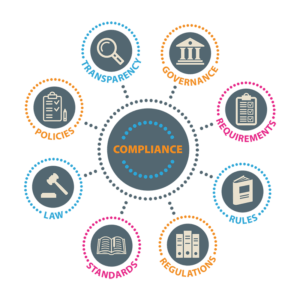
IT compliance consulting is a professional service that helps businesses align their technology systems, processes, and data practices with applicable legal and regulatory standards. This includes data protection laws, privacy regulations, and industry-specific rules. It is increasingly important for organizations of all sizes to have a structured approach to compliance. IT compliance refers to the process of ensuring that a company’s technology systems operate within the boundaries set by law, regulatory bodies, and industry standards. This can include requirements for how data is stored, who can access it, and how it is protected.
Regulation is becoming more specific and more demanding. Laws such as Act 151 (SB696) and the Pennsylvania Insurance Data Security Act introduce stronger expectations around data security, breach notification, and governance. Organizations must be able to show not only that they have policies, but that those policies are implemented, enforced, and reviewed.
For many organizations, the simplest way to make this practical is to work with structured managed IT services from Infradapt that include compliance planning and ongoing oversight.
Cyber insurance underwriters now routinely ask detailed questions about security controls, incident response, user training, and regulatory compliance. Policies may be denied, limited, or rescinded if controls are weak or if the organization cannot prove it follows required procedures.
IT compliance consulting helps organizations document their security posture, identify gaps that could affect coverage, and implement improvements that insurers expect. This reduces both the likelihood of serious incidents and the chance of difficult negotiations with insurers after an event.
Sectors such as healthcare, government, and education handle sensitive personal and operational data. They also tend to face overlapping rules and strict enforcement. For these organizations, compliance is part of daily operations, not a one time exercise.
Engaging outsourced IT for businesses from Infradapt can provide the combination of technical management and regulatory awareness needed to keep systems aligned with requirements while supporting core missions.
Assessing current IT systems against applicable compliance frameworks
Identifying security or documentation gaps
Creating and updating governance policies
Implementing technical controls and safeguards
Delivering staff training programs
Preparing for audits and assessments
Infradapt’s Virtual Chief Information Officer (vCIO) leads client compliance initiatives.
Their qualifications include:
Certified Information Systems Security Professional (CISSP)
Certificate of Competence in Zero Trust (CCZT)
Professional Scrum Master I (PSM I)
ITIL Foundation
Six Sigma Black Belt Professional (SSBBP)
Governance, Risk, and Compliance Professional (GRCP)
Sarbanes-Oxley Certification (SOTP)
Certified Information Systems Risk and Compliance Professional
HIPAA Certification
ISO 27001 Certification
Compliance consulting supports complex projects like system migrations and certifications.
Structured assessments and remediation plans reduce risk and surprises.
Business continuity and audit readiness are both strengthened.
A compliance program should begin with a clear understanding of current state. A formal assessment identifies gaps, ranks risks, and establishes a baseline. This is often delivered as part of cybersecurity services from Infradapt that combine operational and compliance viewpoints.
Compliance should not be a one time project. Network, endpoint, and application controls must be operated, monitored, and improved over time. Partnering with IT support and network management from Infradapt helps ensure that required configurations remain in place and changes are handled appropriately.
Many incidents have a human root cause, such as phishing or mishandled data. Compliance programs must include regular training so that employees understand policies, reporting procedures, and their responsibilities
Technology, threats, and regulations all evolve. Compliance programs should be linked to continuity and recovery planning, so that major changes do not accidentally break controls or introduce new risks. Services like business continuity and disaster recovery planning from Infradapt support this ongoing alignment.
IT compliance consulting helps organizations turn complex rules into practical, sustainable programs. By aligning technology, processes, and people with regulatory and industry requirements, businesses can reduce risk, protect sensitive data, and support long term growth.
To deepen your understanding of compliance oriented managed services and IT support, review the managed IT services from Infradapt.
The primary goal is to help organizations understand their regulatory obligations, implement the required technical and procedural controls, and maintain documentation that proves compliance. It reduces risk, supports cyber insurance eligibility, and strengthens security posture.
You likely need consulting support if you handle regulated data, operate in a heavily regulated industry, face new audit requirements, have limited internal IT staff, or are unsure whether your current controls meet legal and insurance expectations.
Cybersecurity focuses on protecting systems and data from threats. Compliance focuses on meeting legally or contractually mandated requirements. Both overlap, but compliance defines what must be done, while cybersecurity defines how to protect systems effectively.
Most organizations benefit from annual reviews, with additional assessments during major system changes or when new regulations take effect. Continuous monitoring is recommended for regulated industries.
Compliance improves security but does not guarantee it. Regulations set minimum expectations, while security best practices often go beyond these baselines. A strong program includes both compliance and proactive cybersecurity measures.
Yes. MSPs with compliance expertise can monitor systems, maintain documentation, manage updates, and ensure controls remain effective. This support is especially useful for organizations without internal IT or compliance teams.

